
Complete Beginner to Advanced System
Stop spinning your wheels—here's the progression framework that actually builds mastery.
About This Quest
Master any skill through structured progression—from first attempts to expert execution using proven habit-stacking and deliberate practice frameworks.
Most people quit learning new skills because they're either bored by basics or overwhelmed by complexity. This system fixes that. It's built on progressive overload—the same principle that works in gyms, music schools, and military training. You start with laughably easy wins to build momentum, then layer complexity only when your brain is ready. The difference between this and random practice? You're tracking specific metrics, adjusting based on real feedback, and stacking micro-habits that compound over weeks. This isn't theory. I've used this exact framework to go from zero to proficient in everything from basic carpentry (couldn't hammer straight) to conversational Spanish (failed high school twice). The key is the feedback loops: you do something, measure it, adjust one variable, repeat. Week one feels like playing on tutorial mode. Week eight, you're noticing details that used to be invisible. Week twelve, beginners ask you for advice. You'll move through three distinct phases: Foundation (weeks 1-4) where you build the base habit and learn to recognize good from bad; Expansion (weeks 5-8) where you add complexity and start pattern recognition; and Refinement (weeks 9-12) where you troubleshoot weak spots and develop your personal style. The system works because it respects how your brain actually learns—not how productivity gurus think it should.
Why This Quest Matters
You'll watch yourself go from fumbling beginner to someone who notices details that used to be invisible. Week twelve, beginners will ask you for advice. This framework turns the chaotic, frustrating early stages of learning into a clear path with visible progress markers—and it works because it respects how your brain actually learns, not how productivity gurus think it should.
What You'll Experience
- How to break any complex skill into trainable micro-components
- The art of progressive overload—adding complexity only when your brain is ready
- How to set up feedback loops that actually improve performance
- The difference between isolated practice and integrated skill development
- Why teaching others is the final test of true proficiency
What You'll Need
Top gear to make this quest great.
Pull it off
Habit Tracking Journal (Structured Format)
Digital tracking fails for long-term habit building because of notification overload and app-switching friction. A dedicated physical journal keeps your progression visible and forces the reflection moment when you write by hand. The act of filling boxes creates a visual chain you don't want to break.
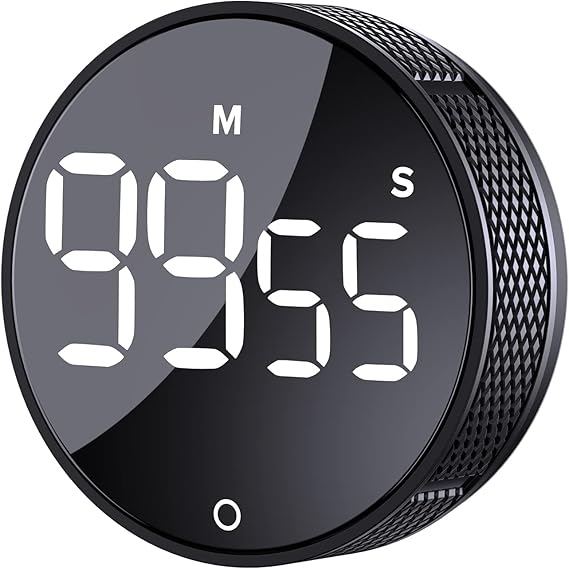
Standard phone timers kill your practice flow because they bring notifications and distractions. A purpose-built timer lets you program component-specific intervals (8 min/7 min splits) and transition between phases without breaking focus. Vibration mode keeps you aware without jarring audio interrupts.
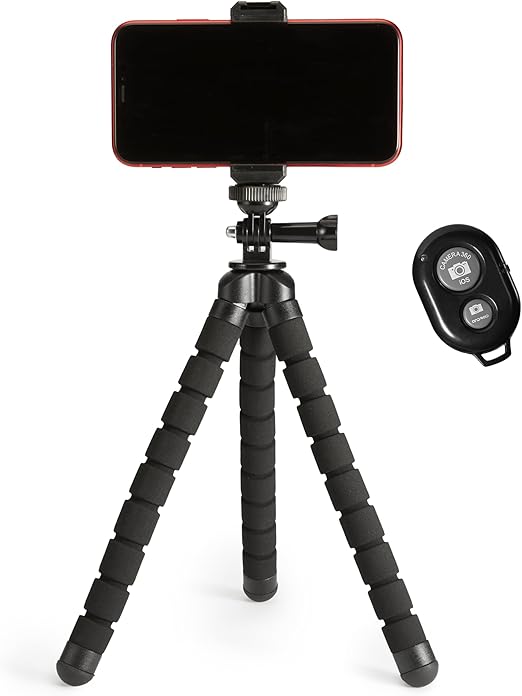
Self-feedback requires watching yourself perform the skill, but holding a phone while practicing is impossible. This setup lets you record full practice sessions from multiple angles, then review specific moments where technique breaks down. The remote means you can start/stop recording without repositioning.
As an Amazon Associate I earn from qualifying purchases. Prices may change.
Step-by-Step Guide
Define your skill in measurable terms
Pick one specific skill with concrete outcomes—not 'get better at photography' but 'shoot manual mode in varied light.' Write exactly what proficient looks like: 'Take 20 properly exposed photos in changing light without checking the screen.' Then break the skill into 5-7 micro-components, ordered from foundational to advanced (for cooking: knife skills, heat control, seasoning, timing, plating).
💡 Pro Tips:
- • Avoid vague goals. If you can't measure it or demonstrate it to someone, refine it further.
- • Your components should build on each other—each one assumes mastery of the previous.
Build your Foundation Phase (Weeks 1-4)
Practice only your first component, 15 minutes daily at the same time. Use simple tracking—checkboxes or tally marks. If learning guitar, just do chord transitions. If learning to run, just log consistent time on feet at conversational pace. Set up your feedback mechanism now: recording yourself, weekly input from someone better, posting to critique communities, or objective measurements. Review every 3-4 days.
💡 Pro Tips:
- • Do not add complexity yet. The goal is building the habit and learning to recognize good from bad.
- • Same time daily makes the habit stick faster than varying your schedule.
Enter Expansion Phase (Weeks 5-8)
Week 5: Add your second component while maintaining the first. Split your 15 minutes: 8 on component one, 7 on component two. Increase feedback to every 2 days. Weeks 6-8: Layer in components three and four. Practice integrated sequences now—a cook moves from chopping to chopping-while-managing-heat. Track where you're smooth versus where you hit friction.
💡 Pro Tips:
- • Notice what patterns emerge when combining elements—this is where real skill development happens.
Refine your weakest link (Weeks 9-10)
Deliberately practice your weakest component for 10 of your 15 minutes. Use remaining time for full sequences. Film yourself or get live observation. The goal is identifying and fixing the specific micro-movements or decisions that separate you from proficiency.
💡 Pro Tips:
- • Your weakest link caps your overall performance. Address it directly rather than avoiding it.
Introduce variable conditions (Weeks 11-12)
Practice in different environments and circumstances. If you've been in your kitchen, try a different space. If you've been writing at your desk, try a coffee shop. If you've been running the same route, switch terrain. Mastery means performing well when conditions aren't perfect.
💡 Pro Tips:
- • Variables reveal whether you've truly internalized the skill or just memorized one context.
Assess and teach (End of Week 12)
Run a comprehensive self-assessment against your original proficient definition. Record it. Then teach the skill to someone else—this reveals gaps you didn't know existed. Schedule your next 12-week cycle for the next skill level up.
💡 Pro Tips:
- • Teaching forces you to articulate what you're doing, which often exposes fuzzy understanding.
Gear Up for Your Quest
The gear that makes this quest work.
Pull it off

Habit Tracking Journal (Structured Format)
Digital tracking fails for long-term habit building because of notification overload and app-switching friction. A dedicated physical journal keeps your progression visible and forces the reflection moment when you write by hand. The act of filling boxes creates a visual chain you don't want to break.
+ complete the kit — 3 more

Standard phone timers kill your practice flow because they bring notifications and distractions. A purpose-built timer lets you program component-specific intervals (8 min/7 min splits) and transition between phases without breaking focus. Vibration mode keeps you aware without jarring audio interrupts.
Dedicated timer device or specialized app with custom interval programming and silent vibration alerts
Get on Amazon · $13.29 — Interval Timer with Multiple Presetsdetails & deals →
Smartphone Tripod with Remote Shutter
RecommendedSelf-feedback requires watching yourself perform the skill, but holding a phone while practicing is impossible. This setup lets you record full practice sessions from multiple angles, then review specific moments where technique breaks down. The remote means you can start/stop recording without repositioning.
Flexible tripod mount with Bluetooth remote for hands-free recording and playback analysis
Get on Amazon · $13.87 — Smartphone Tripod with Remote Shutterdetails & deals →
Skill-Specific Measurement Tool
RecommendedObjective metrics eliminate the guesswork and ego from self-assessment. A metronome shows exactly when your timing drifts. A scale reveals when your 'eyeballed' portions are 40% off. These tools convert subjective feel into concrete numbers you can track week-over-week, making invisible progress suddenly visible.
Domain-specific measurement device relevant to your chosen skill (metronome for music, stopwatch for athletics, kitchen scale for cooking, light meter for photography)
Get on Amazon · $5.69 — Skill-Specific Measurement Tooldetails & deals →RELATED GEAR GUIDE
Gamify Your Life Kit: 6 Picks to Turn Days Into Quests
Field-tested picks · Personal Growth
As an Amazon Associate, IRL Sidequests earns from qualifying purchases at no extra cost to you.
Prices and availability are subject to change. The price shown at checkout on Amazon at the time of purchase will apply.
Editor's Picks
Hand-selected quests our team thinks you'll love

Random Side Quest Generator: Complete Guide to Spontaneous Adventures
Turn decision paralysis into roll-the-dice action.

Desk Reset Rituals for Screen Workers
Your screen blur isn't age—it's ritual deficit.

Build Your Domestic Confidence Toolkit
The difference between panicking when something breaks and calmly handling it yourself.